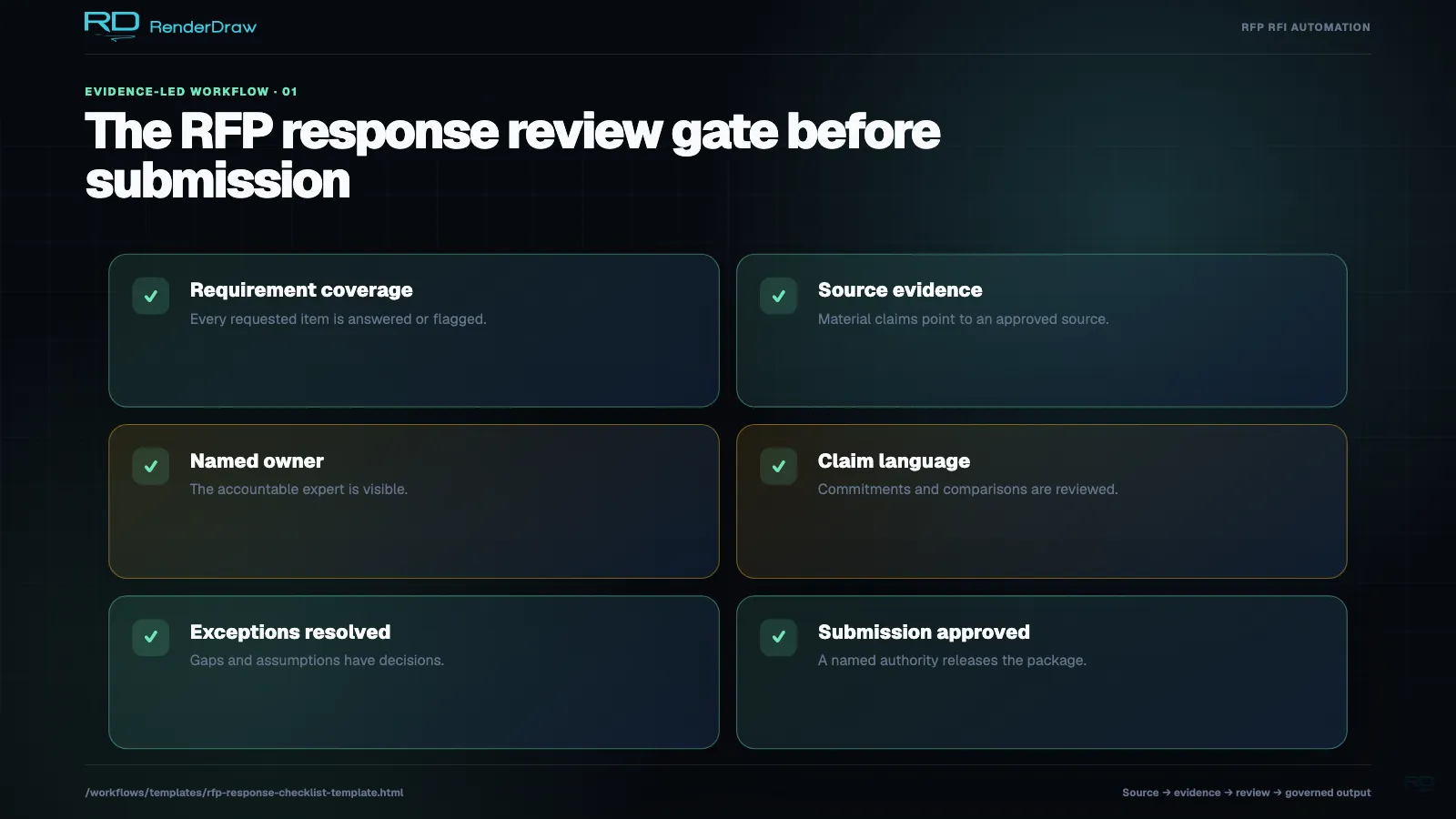
Use this checklist to manage RFP intake, requirement ownership, approved response content, pricing review, risk, attachments, approvals, and submission evidence before a proposal goes out.
An RFP response checklist should track intake completeness, deadlines, requirements, compliance status, answer owner, approved content source, pricing impact, evidence, attachments, reviewer approval, submission format, and final delivery status. This keeps proposal work from becoming a last-minute scramble of missing answers, unsupported claims, pricing gaps, and unapproved attachments.
RenderDraw can support a configured response workflow based on this checklist; automation, integrations, and approval stages depend on implementation.
Last updated: July 1, 2026. Reviewed by RenderDraw workflow automation specialists.
| Stage | Checklist Item | Why It Matters |
|---|---|---|
| Intake | Confirm all RFP files, addenda, Q&A logs, portal rules, and deadlines | Missing source material can create compliance gaps before response work begins. |
| Requirements | Extract mandatory requirements, response rules, evaluation criteria, and owners | Every requirement needs a disposition, answer source, reviewer, or exception path. |
| Content | Use approved answers, product facts, certifications, case studies, and evidence | Approved sources reduce stale claims and make the response easier to defend. |
| Pricing | Validate quote schedules, assumptions, exclusions, alternates, and margin exceptions | Pricing mistakes can damage margin or make the response noncompliant. |
| Review | Route legal, compliance, technical, pricing, and executive approval gates | Named reviewers prevent informal signoff from becoming the control process. |
| Submission | Verify attachments, signatures, format, portal upload, receipt, and audit record | Submission mechanics matter as much as proposal quality when the buyer enforces format rules. |
List the RFP package, deadlines, mandatory requirements, owners, and response rules before drafting starts.
Track evidence, approved content, pricing impact, risk level, reviewer status, and unresolved exceptions.
Confirm final format, attachments, signatures, delivery channel, receipt, and archive location.