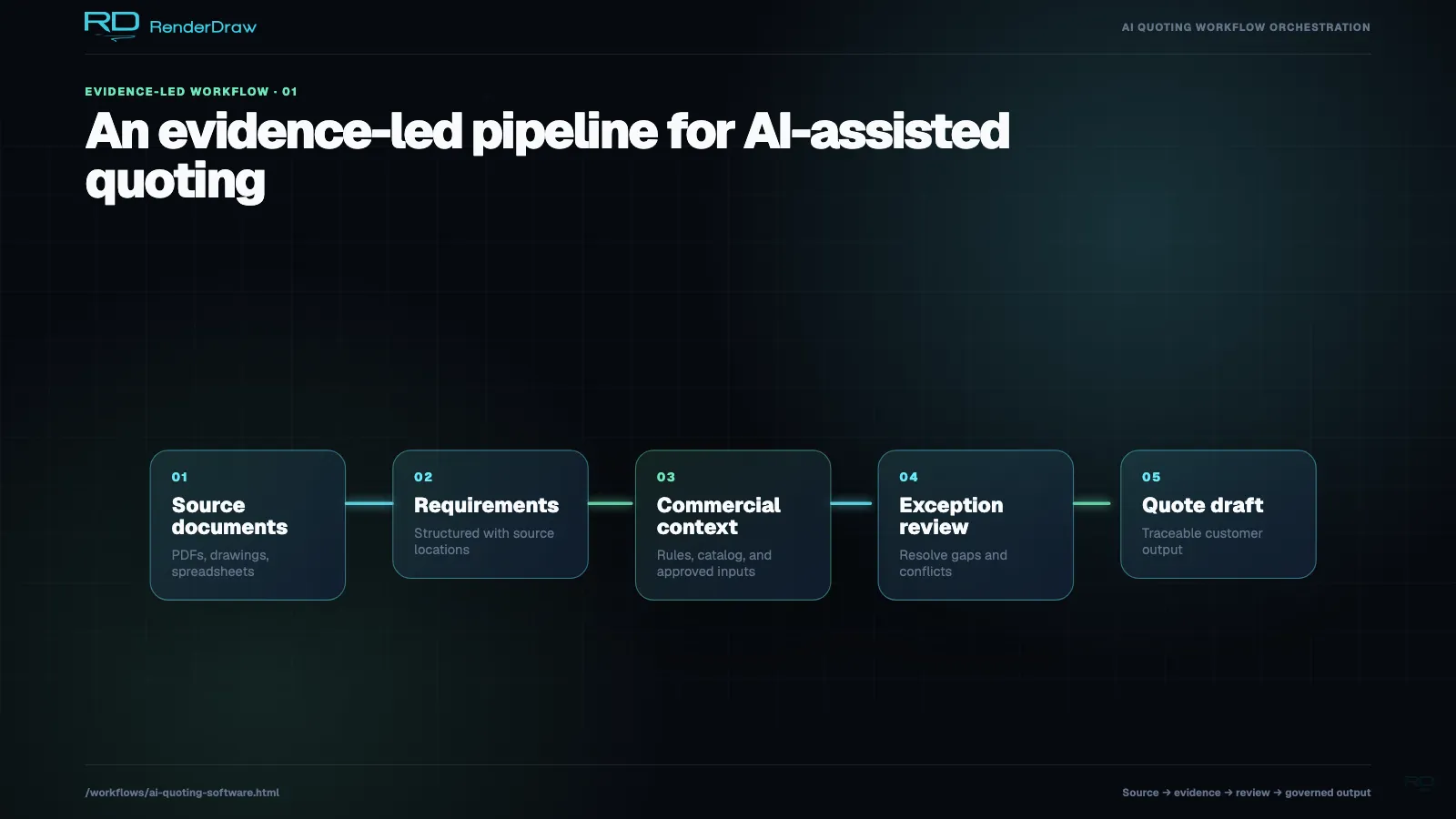
RenderDraw reads RFPs, drawings, CAD files, specs, catalogs, pricing tables, and prior proposal content, then produces source-traceable quotes and proposals with human approval gates.
AI quoting software uses AI to extract requirements, quantities, products, scope, and pricing inputs from documents and drawings, then assembles a reviewable quote or proposal. RenderDraw focuses on source-traceable quote automation for RFPs, takeoffs, CAD workflows, and Salesforce-connected pricing systems.
Good AI quoting does not stop at drafting text. It connects extraction to pricing, evidence, approval status, and the source record a reviewer can inspect before submission.
Last updated: July 1, 2026. Reviewed by RenderDraw workflow automation specialists.
| Workflow | Primary Input | Generated Output | Best Review Gate |
|---|---|---|---|
| RFP AI quoting | RFP PDFs, DOCX files, addenda, portal exports | Compliance matrix, priced proposal, response draft | Sales, legal, pricing, compliance |
| Takeoff AI quoting | PDF drawings, scans, CAD, BIM, specifications | Quote workbook, quantities, source coordinates, bid rows | Estimator and pricing manager |
| CAD-to-quote automation | DWG, DXF, STEP, IFC, Revit, SolidWorks files | Configured BOM, products, options, quote lines | Sales engineer and product expert |
| Proposal automation | Approved answers, specs, case studies, pricing outputs | Proposal draft, attachments, review packet | Proposal manager and executive sponsor |
Every requirement, answer, quantity, product, and price should link back to a source document, drawing coordinate, price table, or approved knowledgebase record.
The quote should use live or approved pricing from CPQ, ERP, supplier catalogs, workbooks, labor tables, margin rules, and contract terms.
AI should draft and structure the quote, while estimators, sales engineers, pricing teams, legal, and compliance reviewers approve exceptions.