
Electrical estimating methods and costing
Electrical contractors price work four ways: square-foot budgets, per-device prices, assemblies, and detailed takeoff with labor units. Each fits a stage of the project. Most bad electrical numbers come from using a budget method at bid time, or from labor units applied without adjusting for job conditions.
- Square-foot budgets
- Per-device and assemblies
- Labor units
- Labor factors
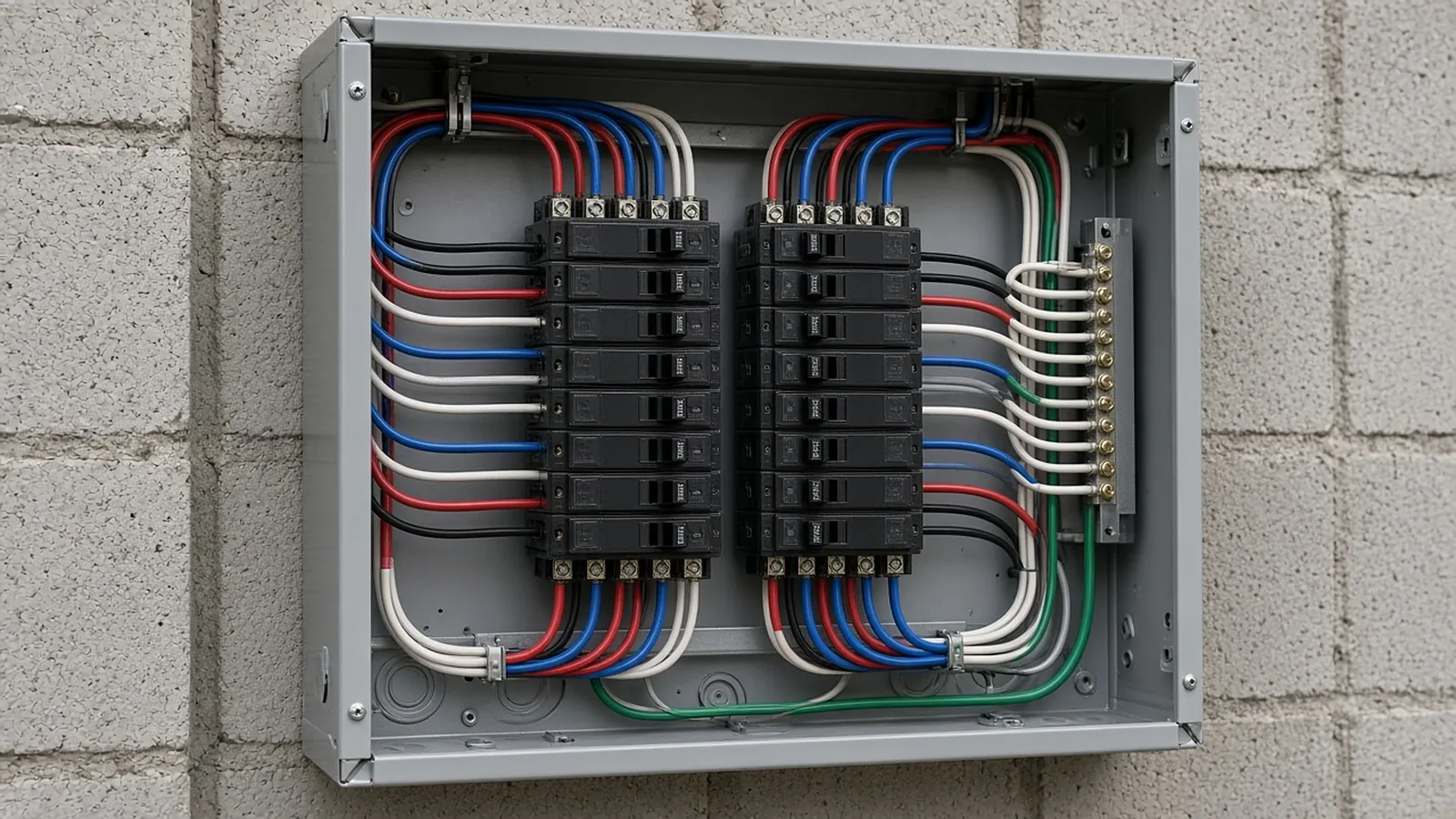
Four methods, four jobs
| Method | How it works | Use it for | Watch out for |
|---|---|---|---|
| Square-foot | Cost per SF from your past jobs or a cost book such as RSMeans, adjusted for location and building type | Conceptual budgets, go/no-go | Gear, generators and special systems swing the number widely |
| Per-device / per-opening | One price per outlet, fixture or device including material and labor | Repetitive residential and tenant work, change-order pricing | Hides run length and mounting conditions |
| Assembly | A bundle (device, box, ring, plate, wire and conduit allowance) priced from a database, each part with a labor unit | Most commercial bids in estimating software | Default allowances can be wrong for the building |
| Detailed takeoff | Every device, fixture, branch run, feeder and piece of gear measured, with labor units per item or per 100 ft | Hard bids and GMP | Time-consuming; errors come from missed scope, not math |
Your square-foot figures should come from closed-out jobs of similar type and size. Published cost books are a starting point, not a bid.
A detailed estimate
- Scope review: read specs (Divisions 26, 27, 28), addenda, the one-line, panel schedules and fixture schedules before counting anything.
- Takeoff: devices and fixtures by type, branch circuits, feeders by size and length, gear, special systems, temporary power and demolition.
- Material pricing: commodity items (wire, conduit, fittings) from a pricing service or supplier; gear, lighting packages and fire alarm by quote.
- Labor units: hours per item or per 100 ft from your database or a published source such as the NECA Manual of Labor Units.
- Labor factors: adjust for height, access, occupied space, schedule, crew size and site conditions.
- Labor cost: adjusted hours × burdened crew rate.
- Indirects: supervision, equipment and lifts, permits, testing, temporary power, small tools, escalation.
- Markup and review: overhead and profit, then a check against your square-foot history.
Where electrical bids differ
Material prices are close between bidders. Labor isn't. The NECA Manual of Labor Units (the 2025–2027 edition is current) publishes units in three columns, Normal, Difficult and Very Difficult, and a Labor Factor Score Sheet to pick the column. The sheet scores roughly 30 job conditions from 1 to 5; per NECA, totals of 36–75 point to the Normal column, 76–134 to Difficult, 135–150 to Very Difficult, and above 150 to ELECTRI International research plus your own experience.
Commercial estimating systems (Trimble Accubid, ConEst, McCormick and others) ship with labor databases that contractors adjust. Whatever the source, check that the units include the same things: material handling, layout, cleanup, and whether the box, ring and support are inside the device unit or separate.
An assembly in practice
Illustrative numbers, not published labor units.
Device + plate 0.20 hr
4" sq box + mud ring 0.25 hr
1/2" EMT allowance, 25 ft 0.80 hr (illustrative)
12 AWG THHN allowance, 3 × 30 ft 0.35 hr
Assembly total 1.60 hr each
Count: 200 receptacles → 320 hr base
Labor factor (occupied floor, night work, Difficult column): × 1.20 → 384 hr
The math is easy. The risk is the 25 ft conduit allowance: on a floor with long home runs, actual footage may be much higher. Measure a sample of real runs and reset the allowance for that building.
Cost drivers
- Labor: units × factors × burdened rate, the biggest controllable risk.
- Gear: switchgear, panelboards, transformers, often long lead; price by quote and check escalation clauses.
- Lighting: fixture package by quote; check substitutions and controls.
- Wire and conduit: from measured runs; copper prices move, so date your quote.
- Special systems: fire alarm, security, cabling, often by subcontract or vendor quote.
- General conditions: supervision, lifts, temporary power, testing.
Where methods break down
- Using square-foot prices for a building type you haven't built.
- Assemblies with default conduit allowances on large floor plates.
- Labor units applied at Normal on a high-bay, occupied or phased job.
- Gear quotes without a valid-through date in a volatile market.
- Feeders upsized for voltage drop without upsizing the equipment grounds (NEC 250.122(B)).
Takeoff, not your labor units
RenderDraw's AI takeoff proposes device and fixture counts and lengths from PDF drawings, with the source sheet on each row. Low-confidence items go to review, and your estimator accepts, rejects or corrects each one. Labor units, factors, pricing and margin stay in your estimating system and your judgment. Get a free sample takeoff or book a demo.
Questions estimators ask.
What are the main electrical estimating methods?
Square-foot budgets, per-device or per-opening pricing, assembly pricing, and detailed takeoff with labor units. Use square-foot for budgets and detailed takeoff or assemblies for bids.
What is the NECA Manual of Labor Units?
A published set of electrical labor units from the National Electrical Contractors Association, in Normal, Difficult and Very Difficult columns, with a Labor Factor Score Sheet to choose the column. The 2025–2027 edition is current.
What is an electrical assembly?
A bundle of everything needed to install one item, such as a receptacle with box, ring, plate and an allowance of conduit and wire, each with material cost and a labor unit.
Why do electrical estimates differ so much between contractors?
Mostly labor: different units, different factors for job conditions, and different allowances in assemblies. Material pricing is usually close.
Can I use RSMeans for electrical bids?
Cost books are useful for budgets and checks. For hard bids, most contractors use their own labor history and supplier quotes.
Does RenderDraw replace my estimating software?
No. It proposes quantities with sources for your review. Pricing and labor stay in your estimating system.
Counts and runs for your labor units.
Send an electrical set. RenderDraw proposes device and fixture counts with sources; your labor units build the bid.
- Upload the plans, specs and schedules, plus an addendum if you have one.
- RenderDraw reviews the set and the scope you want tested.
- We follow up with extracted quantities, flagged items and next steps.
Where these numbers come from
We checked this guide against the standards, manufacturer documents and industry references below (last reviewed November 2026). Figures marked as rules of thumb are typical ranges, not requirements; your project documents, local code and your own cost history govern.