What to read
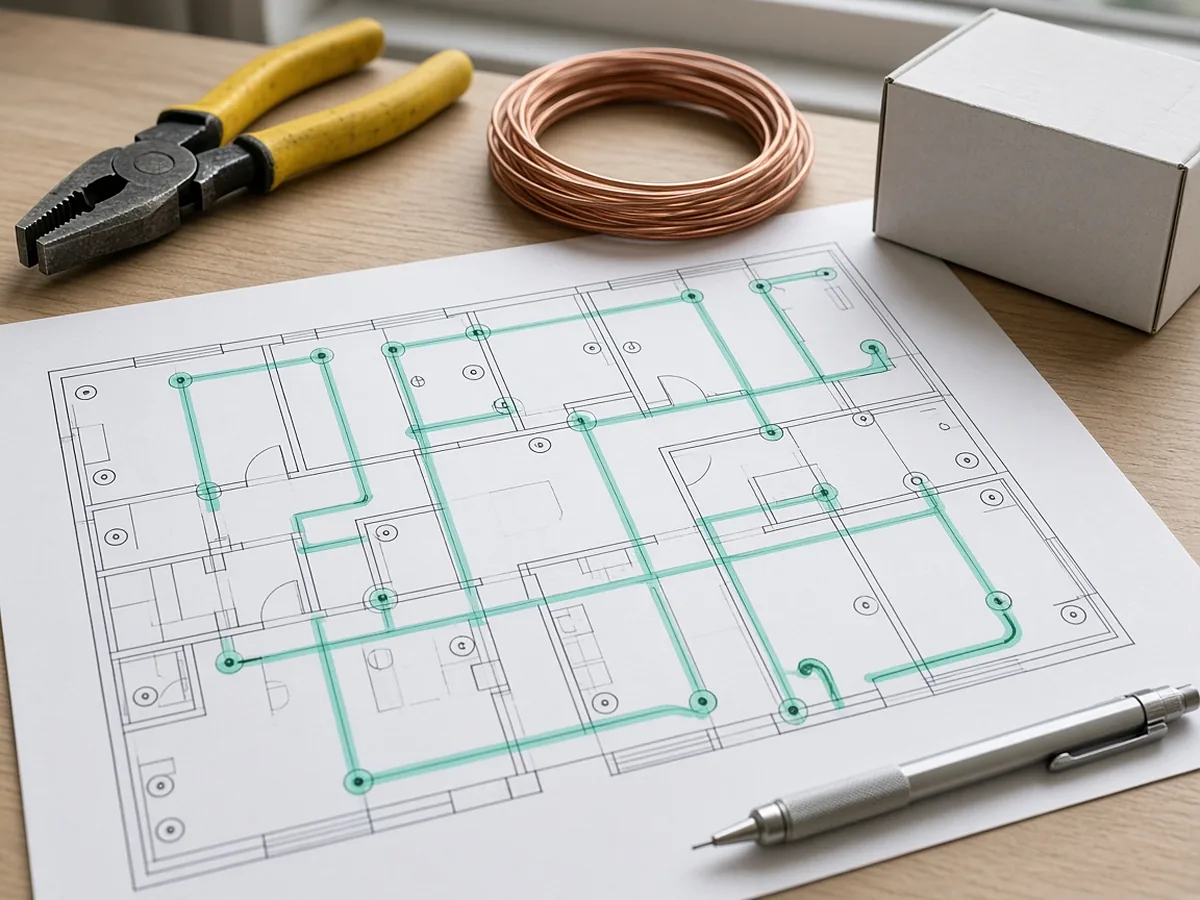
- Electrical demolition plans with devices, fixtures and equipment to remove, relocate or remain.
- Demolition notes, such as "remove all devices in walls to be demolished" or "remove all abandoned wiring".
- Architectural demo plans for walls and ceilings removed.
- New-work plans for what stays and is reconnected, extended or refed.
- Spec Section 26 05 05 (selective demolition for electrical) or equivalent, and any hazardous materials survey.
- Site walk notes, panel directory photos and above-ceiling photos.
Scope items and units
| Item | Unit | Notes |
|---|---|---|
| Make-safe circuits | EA circuit or panel | Lockout, terminate, label, fill panel openings |
| Devices removed | EA | Confirm whether boxes come out where walls remain |
| Fixtures removed | EA by type | Lamps and ballasts handled as regulated waste where required |
| Conduit and wire removed | LF or allowance | Removal versus abandon in place per spec |
| Panels and gear removed | EA | Rigging, utility coordination |
| Circuits extended or refed | EA | Where walls come out but loads stay |
| Temporary power and lighting | LS or per area | For other trades during demo |
| Disposal and recycling | Per load or allowance | Scrap credit decision |
Make-safe: hours to carry
- Identify and de-energize circuits with the owner's facilities team in occupied buildings, and establish an electrically safe work condition per NFPA 70E before removal.
- Lock out and tag de-energized circuits; OSHA 1926.417 requires controls to be locked out or tagged when circuits are deactivated for work.
- Terminate and label conductors at the source; update panel directories.
- Fill unused panel openings with listed closures.
- Verify absence of voltage on every circuit before cutting; mislabeled circuits are common in older buildings.
Abandoned cable: what the code says
The NEC requires removal of the accessible portion of abandoned cable for many limited-energy systems, including fire alarm, communications, Class 2 and 3 and optical fiber cables (for example, 760.25 for fire alarm in the 2023 NEC; the 2026 NEC consolidates many limited-energy rules into new Chapter 7 articles). Cable tagged for future use is not abandoned. Power branch circuits do not have the same general removal rule, but specs often require removing abandoned conduit and wire back to source. Read the spec and confirm with the AHJ; this note can be a large item.
Regulated waste: PCB ballasts and lamps
- Ballasts: EPA says fluorescent light ballasts made before July 1, 1979 may contain PCBs. Ballasts made between 1979 and 1998 that do not contain PCBs should be labeled "No PCBs". If a ballast has no label, EPA advises treating it as PCB-containing unless you know otherwise. Leaking ballasts need special handling and disposal.
- Lamps: fluorescent and other mercury-containing lamps are commonly managed as universal waste under EPA rules, and some states are stricter. Price boxes, transport and recycling.
- Check the hazardous materials survey for asbestos in ceilings or fireproofing above fixtures, which changes who removes what and when.
Pricing
Demolition labor depends on access, ceiling type, height, occupancy, and whether conduit is removed or abandoned. Work in occupied buildings is often after hours, which adds premium time and lowers productivity. Price unknown conditions with allowances or unit prices and say so.
Worked example
A 10,000 sq ft tenant space is noted "remove all lighting and devices back to source, make safe; existing panel LP-2 to remain." The demo plan shows 140 2x4 fluorescent troffers, 6 exit signs, 96 devices and 18 circuits.
The ballast and lamp counts are what turn a "simple demo" into a waste-handling line. A site walk to open a few fixtures settles the lamp count and ballast labels.
Price the unknowns
Hidden conditions are common: unlabeled circuits, circuits feeding areas outside the space, and abandoned systems. Carry an allowance or a unit price per unexpected circuit, and state that existing conditions are assumed as shown.
Language that protects you
"Removal of lighting and devices shown on ED-101; make safe at source; existing panel LP-2 to remain. Assumes circuits are identified and de-energized with owner's facilities staff. Removal of abandoned cable limited to accessible areas above lay-in ceilings. Disposal of lamps and non-PCB ballasts included; PCB-containing or leaking ballasts handled at a unit price of $____ each. Asbestos and other hazardous materials excluded."
Coordinate with other trades
Electrical demo is rarely one visit. Make-safe happens before general demolition, removal happens alongside it, and temporary power and lighting stay until new work replaces them. Price each visit and the temporary systems for the duration the schedule shows.
Where RenderDraw fits
RenderDraw's AI takeoff proposes device and fixture counts from demo plans with sheet sources for estimator review. If you need floor plans of existing spaces, RenderDraw MeasurePro is an iPhone and iPad app that captures rooms on site. Try a free sample takeoff, or see the electrical takeoff guide for new work.