Order of work
| Step | What you do | Source |
|---|---|---|
| 1. Index and specs | Sheet list, revisions and addenda, Division 26, 27 and 28 sections, scope split with other trades | Cover sheet, spec book, bid form |
| 2. Legends and notes | Symbol legend, abbreviations, general and keyed notes, mounting heights | E0 sheets |
| 3. Schedules | Fixture, panel, equipment connection and device schedules | Schedule sheets, mechanical schedules |
| 4. Counts | Fixtures and devices by type, sheet by sheet, by area | Lighting and power plans |
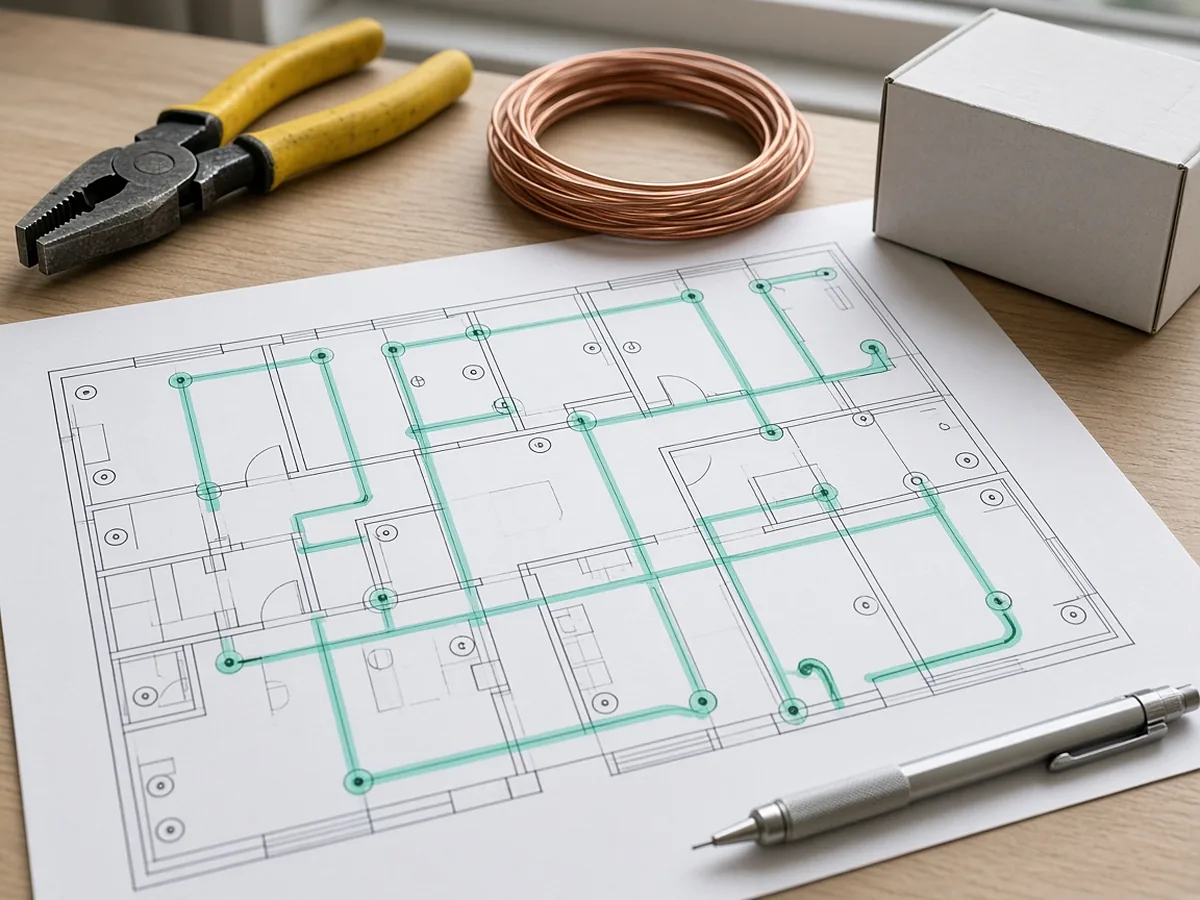
| 5. Branch runs | Homeruns and device-to-device conduit and wire, with drops | Plans, circuiting |
| 6. Feeders | Size, length, conduit and conductors for each feeder | One-line, riser, feeder schedule |
| 7. Gear and equipment | Switchgear, panels, transformers, disconnects, generators, ATS | One-line, schedules, specs |
| 8. Special systems | Fire alarm, low voltage, security, if in scope | T, FA and security sheets |
| 9. Reconcile | Schedules against plans; panels against circuits; equipment against connections | Everything above |
Reading the spec before counting matters. Spec sections decide whether branch drops can be MC cable, which device grade and finish apply, whether there is seismic bracing, and what testing, labeling, commissioning and as-builts you owe. None of that is drawn.
Counts
- Count against the legend, not memory. Name each count tool after the legend symbol and fixture type.
- Mark counted areas so nothing is counted twice, especially where enlarged plans overlap floor plans.
- Break down by level and area (and phase, if the job is phased). It makes checking, billing and change orders easier.
- Count boxes, plates and rings with the devices, or carry them in device assemblies; do not forget them.
- Watch for devices that only appear on other trades' sheets: duct smoke detectors, motorized dampers, EWCs, hand dryers, owner equipment.
Branch circuits: measuring without measuring everything
Measuring every branch circuit is slow. Common approaches:
- Measure homeruns to the panel, and use assemblies for device-to-device conduit and wire.
- Measure a representative area accurately, compute conduit per device, and apply that ratio to similar areas.
- Use typical lengths per device type only where the layout is repetitive.
State which method you used in the assumptions, and keep it consistent across floors. See the conduit takeoff guide for drops, supports and fittings.
Feeders and gear
Feeders come from the one-line and riser, priced individually: conduit size and type, conductor size and count including grounds and neutrals, routed length plus vertical, and terminations. Gear is usually priced from vendor quotes. Confirm what the quote includes: lugs, spare breakers, shipping splits, rigging, startup, and arc-flash or coordination studies if the spec requires them.
Labor
Labor is normally applied from unit databases, such as the NECA Manual of Labor Units (the 2025–2027 edition) or the labor units in Trimble Accubid, ConEst or McCormick, then adjusted for conditions: height, congestion, existing building work, occupied spaces, overtime and productivity loss on long schedules. Keep labor adjustments visible as line items rather than buried in unit edits, so a reviewer can see them.
Reconciliation checklist
- Panel schedule circuits against circuits shown on plans, panel by panel.
- Every unit on the mechanical and plumbing schedules has a circuit, a disconnect where required and a connection.
- Fixture schedule types against plan counts; every type on the schedule appears somewhere, and every symbol on plans is on the schedule.
- One-line feeder sizes against feeder schedule and panel main ratings.
- Spec items not drawn: testing, labeling, seismic bracing, temporary power, commissioning support, as-builts.
- Code edition: confirm which NEC the jurisdiction has adopted. The 2026 NEC reorganizes several articles (load calculations moved to Article 120) and adds requirements such as listed cable ties for support.
Panel 2LA schedule lists 42 circuits: 30 lighting and receptacle circuits, 4 equipment circuits, 8 spares and spaces. The plan takeoff shows homeruns tagged for 28 circuits.
Typical causes: equipment circuits shown only on the mechanical sheet, circuits on an enlarged plan not yet counted, or a schedule that was not updated. The gap is a question, not a rounding error: find the six or send an RFI before pricing.
Ready to price
A finished takeoff has quantities by breakdown, a list of assumptions and exclusions, open RFIs, and a sheet reference for every row. That lets someone else check it, and lets you reprice quickly when an addendum lands. For how this feeds a proposal and SOV, see the electrical schedule of values guide.
Where time goes, and what to keep manual
Most of the hours go into repetitive counting and branch measurement. Templates for symbols and assemblies, consistent breakdowns and reviewing proposed counts instead of clicking each symbol cut that time. Reconciliation and judgment (scope, conditions, labor factors) are where accuracy comes from; do not automate them away.
Common misses
- Devices on other trades' sheets.
- Enlarged plans counted twice, or not at all.
- Scale changed between sheets and not re-checked.
- Addenda revising schedules without clouding plan changes.
- Temporary power, testing and labeling left out because they are not drawn.
Where RenderDraw fits
RenderDraw's AI takeoff proposes legend-aware counts traceable to their sheets and sends uncertain items to the estimator for review. Estimators accept or correct each row before it moves on to pricing. Send a set for a free sample takeoff.