
Steel tonnage calculator: cost per ton, per kg.
Type a shape like W12x26 and the weight per foot fills in from the designation. Add plates and a connection allowance, then price the tonnage per ton or per kilogram. Price per ton is a check, not a takeoff, and this page shows why.
Send one plan set. See what the AI extracts and what it flags for review. No obligation.
- Reads W, C, MC, S, HP, WT names
- Plates by thickness
- Short tons or tonnes
1 · Members lb/ft blank = read from W/C/MC name
2 · Plates thickness × W × L
3 · Allowance & price
Live formula
Save your results
Copy these results, then add your approved sample files in the trial brief.
Estimates only. Check every default against your spec, supplier data and crew records before you bid.
Standard formulas, shown on the page.
Nothing hidden. These are the same steps an estimator runs on a takeoff sheet.
1. Weight from the designation
For W, M, S, HP, C, MC and WT shapes, the number after the "x" is the nominal weight in pounds per foot: W16x31 weighs 31 lb/ft. HSS and angle names give dimensions, not weight, so enter lb/ft from the AISC shapes table.
2. Plates
Steel weighs about 490 lb per cubic foot, so a 1-inch plate weighs 40.83 lb per square foot. Multiply by thickness in inches and plan area.
3. Connection allowance
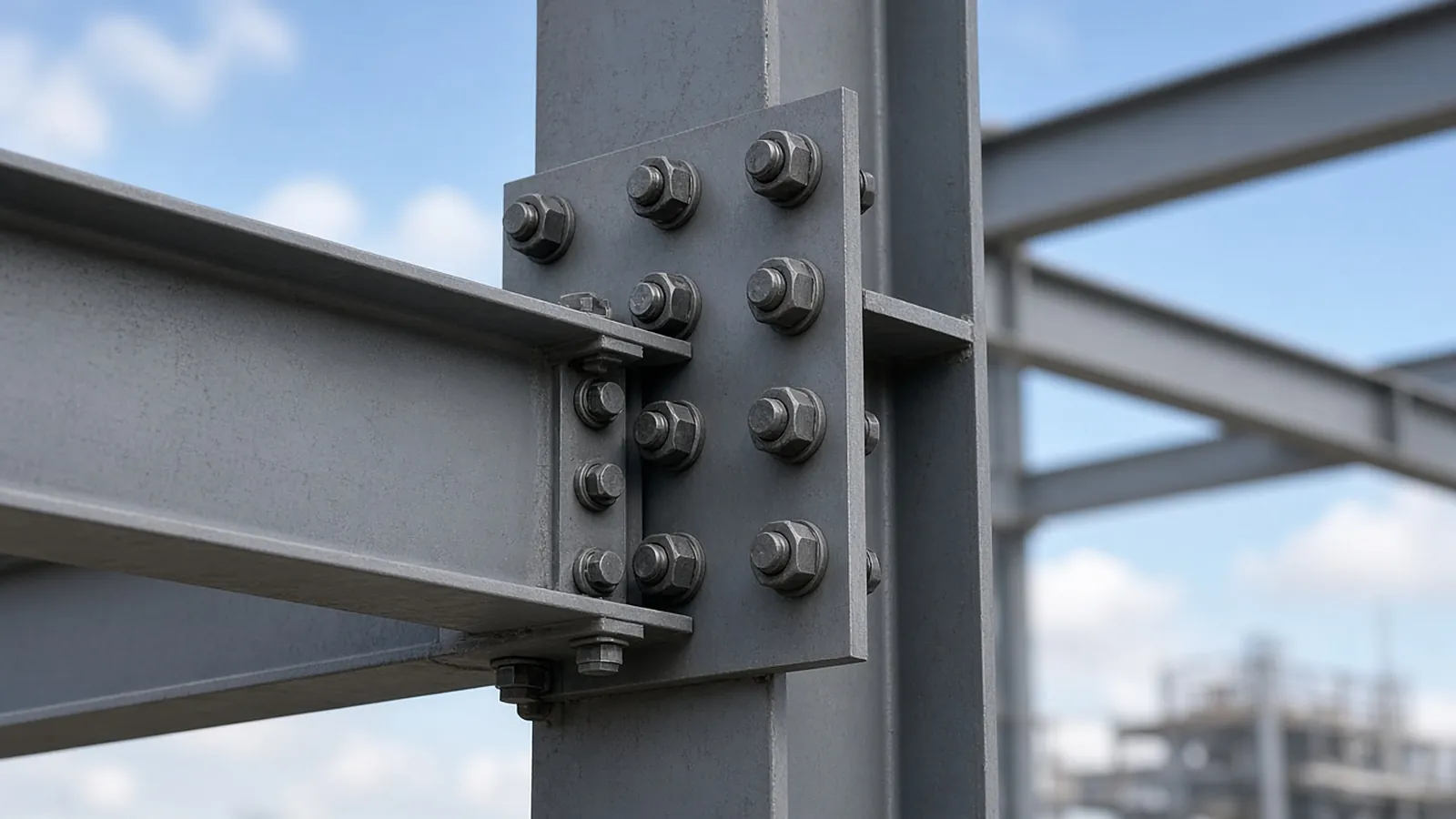
Shear tabs, clip angles, stiffeners, bolts and welds are often carried as a percentage of main-member weight on early estimates. A detailed takeoff counts them.
4. Tons and price
Divide pounds by 2,000 for short tons (or switch to metric for tonnes and kg). Multiply by your price per ton.
Every default is cited or editable.
Replace any of these with your spec, supplier data sheet or job-cost history. The calculator recalculates instantly.
| Input | Default | Source |
|---|---|---|
| Weight per foot (W, C, MC, S, HP, WT) | Read from the designation | AISC shape naming convention: the second number is nominal lb/ft |
| HSS6x6x1/4 weight | 18.82 lb/ft (example row) | Example value; confirm in the AISC Steel Construction Manual shapes table |
| Steel density | 490 lb/ft³ → 40.83 lb/sq ft per inch | Standard density of carbon steel |
| Connection allowance | 10% | Editable assumption; replace with a counted connection takeoff |
| Price per ton | Blank | Enter your own; prices vary by market, mill and fabrication complexity |
Two jobs, same tonnage, different margins.
A ton of long-span W-beams with simple shear tabs and a ton of small members with moment connections, stairs and embeds take very different shop and field hours. Price per ton hides the connection count, which is what actually drives fabrication labor.
Read more: Price per ton isn't a takeoff: why connection counts decide steel margins.
From calculator to bid: get the quantities off the drawings.
Speed is easy to promise. Defensible numbers are the job, so RenderDraw keeps the estimator in control of every quantity that gets priced.
- Source on every row. Each quantity keeps its source sheet, location and reviewer decision.
- Lowest confidence first. The review queue shows the drawing tile with the detection highlighted and the extracted value.
- Uncertain items flagged, not hidden. Anything the AI can't confirm goes to the estimator rather than being guessed.
- Nothing priced before approval. Rows move on to pricing only after they are accepted.
Questions estimators ask
How do you calculate steel tonnage?
Multiply each member's weight per foot by its length and quantity, add plates (thickness × 40.83 lb/sq ft per inch × area), add an allowance for connections, and divide the total pounds by 2,000.
What does W12x26 mean?
A wide-flange shape about 12 inches deep that weighs 26 pounds per foot. For W, S, M, HP, C, MC and WT shapes, the second number is the nominal weight per foot.
What is construction steel cost per ton?
It varies widely by market, mill pricing, member size mix, connections and fabrication complexity, so this calculator uses your own price. Use cost per ton as a check, not as the estimate.
How do I convert to price per kg?
Switch the calculator to metric. Weight shows in kilograms and tonnes, and the cost-per-weight tile shows $/kg.
Can AI count steel members from drawings?
Yes, with review. RenderDraw proposes member counts by size from framing plans and schedules with the source sheet attached, and flags uncertain items for the estimator.
See what the AI reads on your own drawings.
Send one representative steel plan set. RenderDraw reviews it and follows up with what the AI extracted and what it flagged for review. Your files remain private while the request is assessed, and there is no obligation.
- Upload framing plans, column and beam schedules, typical connection details, the structural general notes and the spec sections for structural steel and misc. metals.
- RenderDraw reviews the set and the scope you want tested.
- We follow up with extracted quantities, flagged items and next steps.