
Solar takeoff and estimating: from array to interconnection.
A solar estimate follows the power path: modules on racking, DC wiring and combiners or module-level electronics, inverters, AC collection and the interconnection. The takeoff has to capture every link in that chain, plus the structural, roofing or civil work that makes the array possible and the utility requirements that come with it.
Send one plan set. See what the AI extracts and what it flags for review. No obligation.
- The DC/AC takeoff chain
- Roof vs. ground mount
- Labor and soft costs
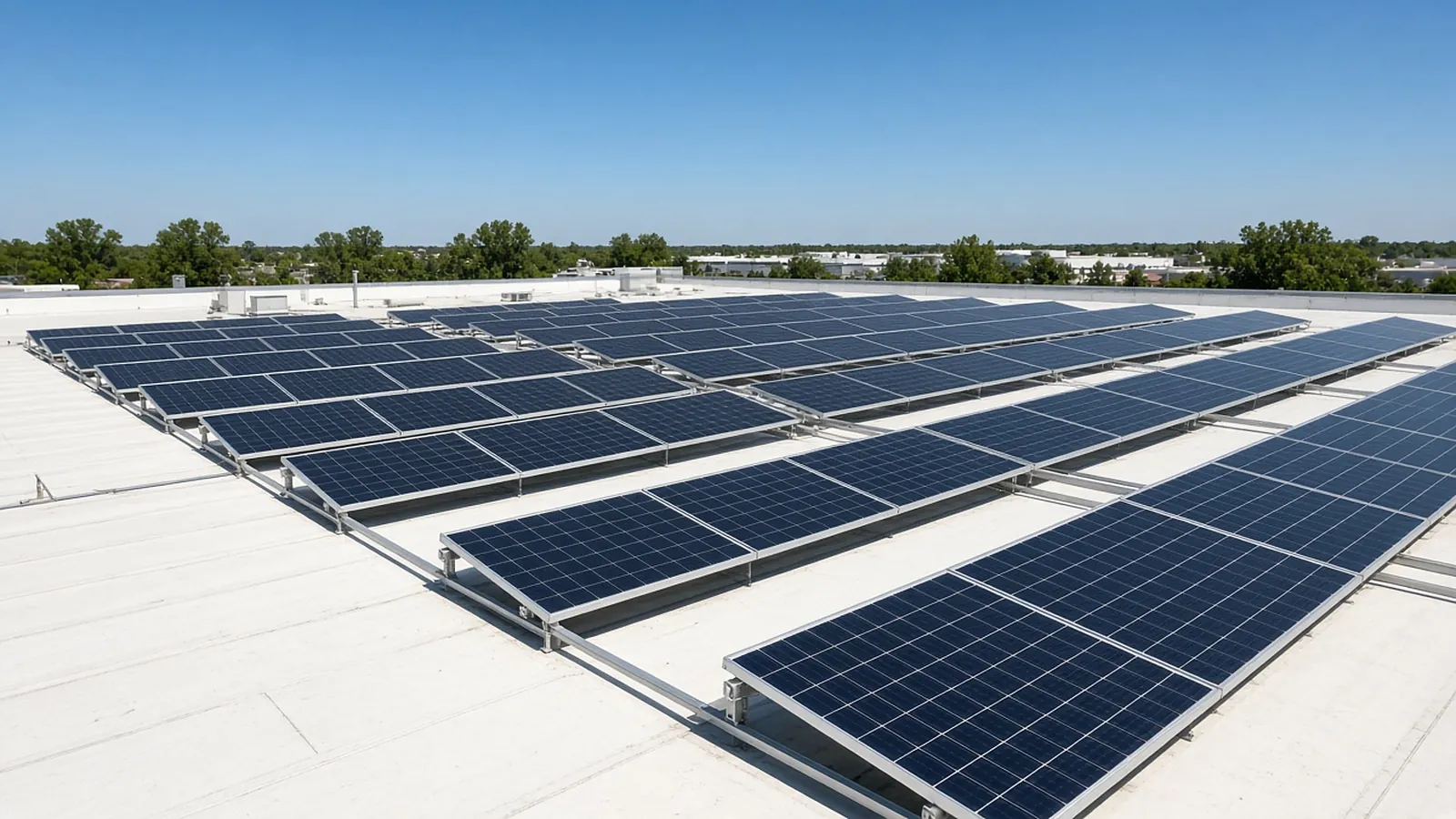
The takeoff chain: module to grid
Think of a solar takeoff as following electricity from the module to the utility. Each link has its own quantities and its own scope questions:
| Link | Take off | Typical source |
|---|---|---|
| Modules | Count by model and wattage | Array layout, module datasheet |
| Racking | Rails or trays by row, attachments or ballast, clamps, end caps | Layout, racking engineering, attachment details |
| Module-level electronics | Optimizers, microinverters or rapid shutdown devices | Single-line, equipment schedule |
| DC wiring | Homeruns by string, wire management, combiners, DC disconnects | String plan, single-line |
| Inverters | String or central inverters, pads, mounting | Equipment schedule |
| AC collection | AC panels, transformers, feeders, conduit, trench | Single-line, site plan |
| Interconnection | Disconnects, meters, switchgear work, protection | Single-line, utility requirements |
| Grounding, monitoring, labels | Equipment grounding, DAS, required signage | Single-line, notes |
DOE's cost benchmarks break a PV system into the same logic: modules, inverters, storage, structural balance of system, electrical balance of system, fieldwork, office work and other costs. Organizing your estimate that way makes it easier to compare against benchmarks and your own history.
Quick math (and where it breaks)
modules  = system DC size (W) ÷ module rating (W)
strings  = modules ÷ modules per string   (from the electrical design)
DC wire  ≈ strings × average homerun length × 2 conductors + module leads and jumpers
Example (illustrative): a 250 kWdc rooftop system with 500 W modules is 500 modules. With 8 string inverters, the string count and length come from the designer's string plan, not from you. The estimator's job is to price the design, not to size strings. If there's no string plan yet, that's a stated assumption.
These shortcuts break when the fire code pathways, setbacks or rooftop equipment reduce the usable roof area. Count modules from the layout, not from the system size in the narrative, and check that they match.
NEC items that hit the estimate
- Article 690 (PV systems). Rapid shutdown in 690.12 for PV systems on buildings usually means module-level devices or a listed rapid shutdown system, plus an initiation device and labels. Price the devices and the labor per module.
- Article 705 (interconnected power sources). Load-side connections are limited by busbar and conductor ampacity rules (the familiar "120% rule" is one option). If the existing panel can't accept the backfeed, the design moves to a supply-side connection or a service upgrade, which is a very different price. Read the single-line carefully.
- Disconnects, overcurrent protection and labeling at each point the code and the utility require.
Price to the NEC edition the jurisdiction has adopted, and read local amendments.
Roof-mounted arrays
Roof work adds:
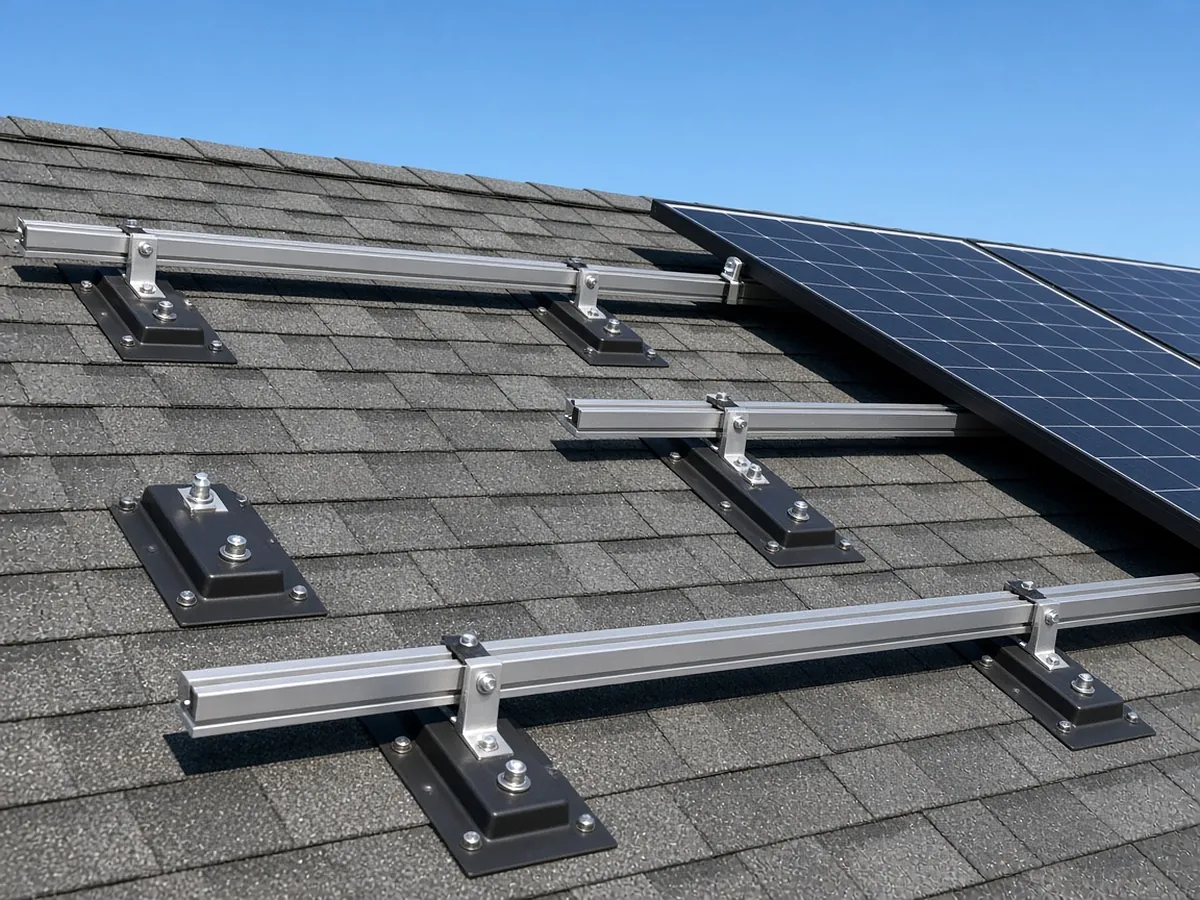
- Attachments and flashing, counted from the layout and the racking engineer's attachment spacing, which tightens in roof edge and corner wind zones. Counting from a typical detail at uniform spacing undercounts.
- Roofing coordination. Many roofing warranties require the roof manufacturer or a certified roofer to flash penetrations. That can be a separate subcontract.
- Ballasted systems trade penetrations for weight. Ballast block count comes from the racking engineering and usually needs a structural check.
- Fire code access pathways and setbacks (International Fire Code Chapter 12, as adopted locally), which affect module count and layout.
- Material handling: crane or lift days, roof protection and staging.
- Structural review of the existing roof, and any reinforcement it finds.
Ground-mounted arrays
Ground mount moves cost into civil and structural:
- Geotechnical data, pile type and length (driven, helical or ground screw) and pull testing.
- Fixed-tilt tables or single-axis trackers, with their own install rates.
- Trenching for DC and AC runs, by depth and conduit count. This is often one of the largest lines.
- Fencing, gates, access roads, erosion control and vegetation management during construction.
- Equipment pads, transformers and medium-voltage work on larger systems.
Labor and soft costs
Most solar contractors track mechanical labor per module or per watt (racking and module setting) separately from electrical labor (DC homeruns, inverters, AC feeders, terminations) and commissioning. Rates vary a lot with roof type, height, racking system and crew experience. Use your own production history.
Price these as separate lines rather than burying them:
- Engineering and permit drawings, if in your scope.
- Permits, inspections and utility interconnection application fees.
- Utility-required equipment and witness testing.
- Commissioning, monitoring setup and owner training.
- Warranty and O&M obligations, if the contract includes them.
Sanity check against benchmarks
DOE's Q1 2025 benchmarks (2024 dollars, PV only) give a reference point:
| Segment | Benchmark system | Min. sustainable price | Modeled market price |
|---|---|---|---|
| Residential | 8 kWdc rooftop | $2.78/Wdc | $2.95/Wdc |
| Commercial | 250 kWdc rooftop (school) | $1.95/Wdc | $1.98/Wdc |
| Utility | 100 MWdc single-axis tracking | $1.07/Wdc | $1.12/Wdc |
These are modeled national figures for specific reference systems, not a price list. A small commercial rooftop with a service upgrade will cost more per watt; a repetitive large ground mount may cost less. If your number is far from the benchmark, find out why before bid day.
Checks before you submit
- Module count matches the layout and the system size in the narrative.
- Attachment count follows the racking engineering, including edge and corner zones.
- Rapid shutdown devices and labels are priced.
- Interconnection method (load side, supply side, service upgrade) is clear.
- Utility-required meters, disconnects and switchgear work are included or excluded in writing.
- Trench and conduit runs from array to inverters to the point of interconnection are measured.
- Roof warranty requirements are known.
Common solar takeoff misses
- Roof attachments taken from a typical detail instead of the actual layout and wind zones.
- Trenching and conduit between array, inverters and the point of interconnection.
- Utility-required production meters, disconnects and switchgear modifications.
- Rapid shutdown devices and initiation equipment.
- Equipment pads, fencing and signage on larger systems.
- Lifts, cranes, storage and site security.
Note for homeowners
If you're a homeowner asking what solar will cost for your roof, installers estimate from roof area, orientation, shading, your electricity use and local incentives. A site visit and a utility bill review produce a real quote. This guide is written for contractors preparing bids.
Where RenderDraw fits
RenderDraw's AI takeoff proposes counts and lengths from plan sets, with the source sheet on every row and uncertain items in a review queue. On a solar set, that means you check the extracted quantities instead of counting modules and attachments one by one. String design, interconnection method and pricing remain your call.
Where RenderDraw fits: the counting, with your review.
Speed is easy to promise. Defensible numbers are the job, so RenderDraw keeps the estimator in control of every quantity that gets priced.
- Source on every row. Each quantity keeps its source sheet, location and reviewer decision.
- Lowest confidence first. The review queue shows the drawing tile with the detection highlighted and the extracted value.
- Uncertain items flagged, not hidden. Anything the AI can't confirm goes to the estimator rather than being guessed.
- Nothing priced before approval. Rows move on to pricing only after they are accepted.
Questions estimators ask
How do you do a solar takeoff?
Walk the power path from module to grid. Count modules by type from the array layout, take off racking and attachments by array, DC wiring by string, inverters and module-level electronics, AC feeders and conduit or trench to the point of interconnection, and the interconnection equipment. Then add structural, roofing or civil scope, permitting and commissioning.
What does commercial solar cost per watt?
DOE's Q1 2025 benchmark for a 250 kWdc commercial rooftop system (without storage) was about $1.95 per Wdc as a minimum sustainable price and $1.98 as a modeled market price, in 2024 dollars. Residential 8 kWdc was about $2.78 to $2.95 and utility-scale about $1.07 to $1.12. Real bids vary widely by region, roof, interconnection and labor.
What NEC articles matter for a solar estimate?
Article 690 for PV systems, including rapid shutdown in 690.12 for systems on buildings, and Article 705 for interconnected power sources, including busbar and supply-side connection rules. Check which NEC edition the jurisdiction has adopted.
How is solar installation labor estimated?
Most contractors track labor per module or per watt for mechanical install, separately from electrical labor for DC and AC work, plus commissioning. Use your own production history; roof type, height, access and racking system change rates a lot.
What do solar takeoffs commonly miss?
Roof attachments counted from a typical detail instead of the layout, trenching and conduit to the point of interconnection, utility-required meters and disconnects, switchgear or service upgrades, rapid shutdown devices, fire access pathway impacts on module count, and material handling.
Can RenderDraw help with solar takeoffs?
RenderDraw's AI takeoff proposes counts and lengths from plan sets with the source sheet on every row, for estimator review. Bring a solar set to a free sample takeoff and see what it extracts.
See what the AI reads on your own drawings.
Send one representative electrical plan set. RenderDraw reviews it and follows up with what the AI extracted and what it flagged for review. Your files remain private while the request is assessed, and there is no obligation.
- Upload power and lighting plans, the fixture schedule, panel schedules, the one-line and the Division 26 spec sections.
- RenderDraw reviews the set and the scope you want tested.
- We follow up with extracted quantities, flagged items and next steps.
Related tools and guides
Keep reading on renderdraw.com
Sources and further reading
- U.S. DOE: Solar Photovoltaic System Cost Benchmarks (Q1 2025)
- NFPA 70: National Electrical Code (Articles 690 and 705)
- ICC: International Fire Code 2024, Chapter 12 Energy Systems
- U.S. DOE: Interconnection of distributed energy resources (overview)
Figures marked as rules of thumb are starting points, not standards. Check the current edition of any code or standard your project specifies, and use your own historical production rates where you have them. Sources checked 2026-11-01.