
AI HVAC estimating that keeps the estimator in charge.
RenderDraw's AI reads mechanical plans and schedules, proposes equipment, air device, duct and piping quantities with the source sheet attached, and queues anything uncertain for review. You get the first pass in a fraction of the time; your estimator still owns every priced number.
Send one plan set. See what the AI extracts and what it flags for review. No obligation.
- Equipment vs. schedule checks
- Duct and pipe runs
- Review queue by confidence
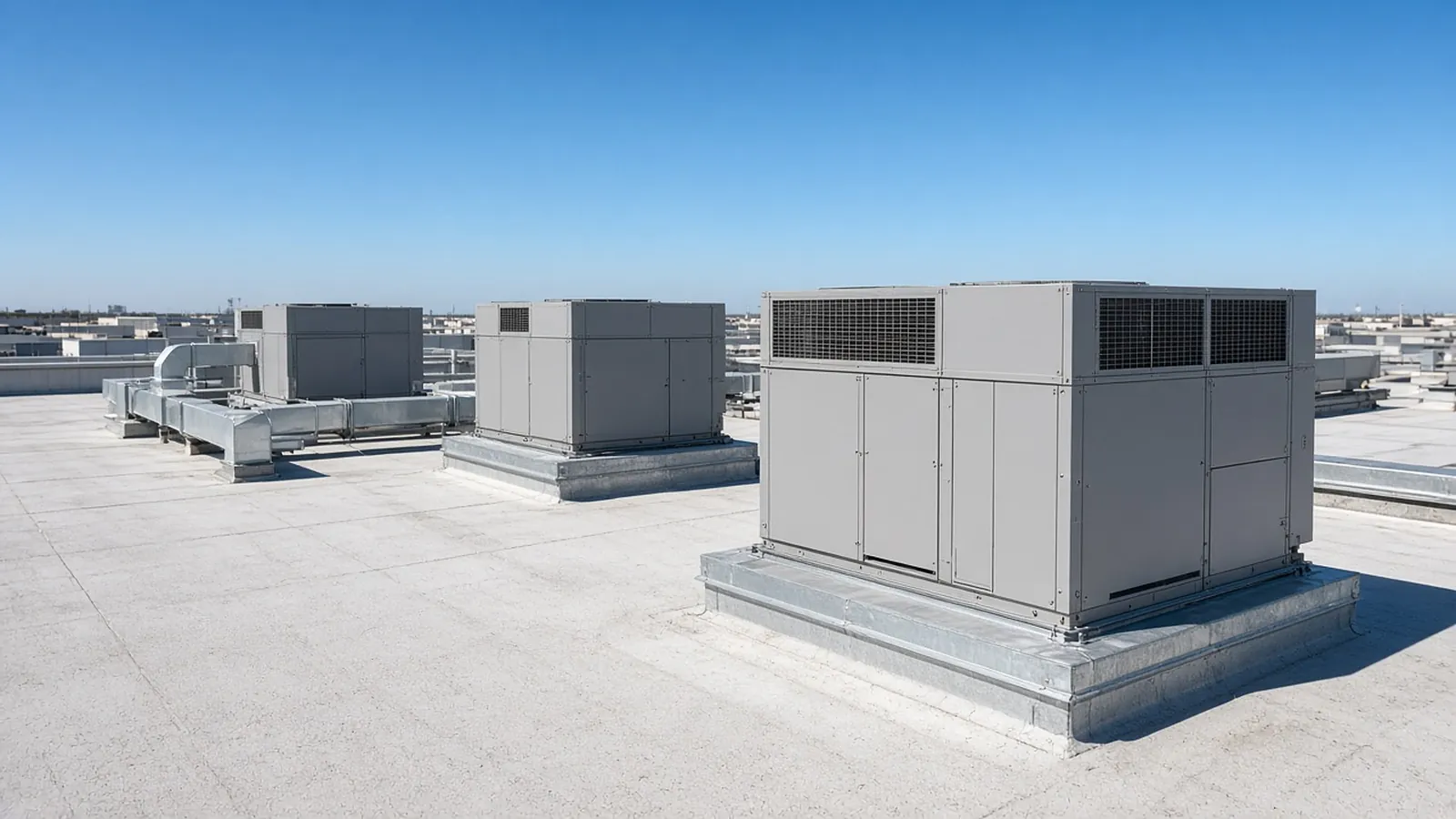
AI first pass, human decision.
AIAI proposes
- Equipment tags counted against schedules
- Air devices by type
- Duct runs by size, pipe by system and size
- Revision deltas
EstimatorEstimator decides
- Construction class and gauge
- Labor units and crew
- Equipment quotes, alternates
- Approval of every row
The quantities a HVAC estimator actually needs
These are the items RenderDraw proposes from the drawings, each linked to the sheet it came from, for your estimator to accept, correct or reject.
| Item | What is measured or counted | Where it comes from |
|---|---|---|
| Equipment | RTUs, AHUs, VAVs, fans by tag | Equipment schedules, plans |
| Ductwork | Linear feet and weight by size and gauge | Duct plans, sections |
| Air devices | Diffusers, grilles, registers by type | Plans, air device schedule |
| Piping | Hydronic and refrigerant piping by size | Piping plans |
| Controls | Points, sensors, controllers | Controls drawings, sequences |
From plan set to reviewed quantities.
AI-powered, human-approved. Each stage records what ran, what changed and who approved it.
Send one plan set
Upload mechanical plans, equipment and air device schedules, duct sections, controls drawings and the Division 23 spec sections. Add an addendum if you have one.
AI proposes quantities
Counts, lengths and areas come back with the source sheet and location attached to every row.
Estimator review
Low-confidence items surface first. Your estimator accepts, corrects or rejects each one.
Map to your assemblies
Approved quantities map to your items, assemblies and estimating assumptions.
Price reviewed rows
Labor units, material pricing and supplier quotes apply only to rows that passed review.
Hand off with evidence
Approved quantities move on to pricing and visual CPQ with the evidence trail still attached.
Supported files and tasks depend on your trade and implementation. Confirm them in the free sample run.
What we checked (November 2026)
- Refrigerant transition (2026):
- Under EPA's Technology Transitions rule, new split systems built from components made on or after January 1, 2025 must use refrigerant below 700 GWP (in practice A2Ls such as R-454B or R-32).
- EPA's amendment, effective July 27, 2026, allows R-410A systems built from pre-2025 components to be installed until that inventory runs out.
- Some states are stricter: New York kept January 1, 2026.
- Confirm the refrigerant on each equipment quote.
- What AI can't read from plans (rule of thumb):
- duct gauge and reinforcement, unless scheduled
- hanger spacing
- testing and balancing scope
- controls points that live only in a sequence of operations
- Schedules vs. plans: count air devices from the plans and compare totals against the air device schedule by tag. Differences are RFIs, not rounding.
The AI drafts. Your estimator decides.
Speed is easy to promise. Defensible numbers are the job, so RenderDraw keeps the estimator in control of every quantity that gets priced.
- Source on every row. Each quantity keeps its source sheet, location and reviewer decision.
- Lowest confidence first. The review queue shows the drawing tile with the detection highlighted and the extracted value.
- Uncertain items flagged, not hidden. Anything the AI can't confirm goes to the estimator rather than being guessed.
- Nothing priced before approval. Rows move on to pricing only after they are accepted.
Questions estimators ask
What is AI HVAC estimating?
Using AI to extract HVAC quantities from drawings and specs so estimators spend time reviewing and pricing rather than counting.
Is AI mechanical takeoff accurate?
It depends on drawing quality; RenderDraw links every row to its source and flags low-confidence items first.
Does it replace my estimating system?
No. Reviewed quantities feed your existing pricing.
What should we send?
Mechanical plans, schedules, sections, controls and Division 23 specs.
See what the AI reads on your own drawings.
Send one representative HVAC plan set. RenderDraw reviews it and follows up with what the AI extracted and what it flagged for review. Your files remain private while the request is assessed, and there is no obligation.
- Upload mechanical plans, equipment and air device schedules, duct sections, controls drawings and the Division 23 spec sections.
- RenderDraw reviews the set and the scope you want tested.
- We follow up with extracted quantities, flagged items and next steps.
Related tools and guides
Keep reading on renderdraw.com
Sources and further reading
Vendor pages, standards and references checked for this page. Product features and prices change; confirm current details with each vendor.
- NAHB: EPA finalizes refrigerant rule update (May 26, 2026) — R-410A pre-2025 inventory; New York exception
- US EPA: Regulatory actions for technology transitions — Technology Transitions rule
Last reviewed November 2026.