
Structural steel estimator courses and how to actually learn the job.
There is no license for structural steel estimators and no single course that makes one. Most people learn from a mix of shop or detailing experience, a few targeted courses, the AISC Manual and Code of Standard Practice, and a lot of supervised bids. This guide lists the training that actually exists and a practice plan that builds judgment.
Send one plan set. See what the AI extracts and what it flags for review. No obligation.
- Skills to learn
- Courses and references
- Practice plan
What the job actually is
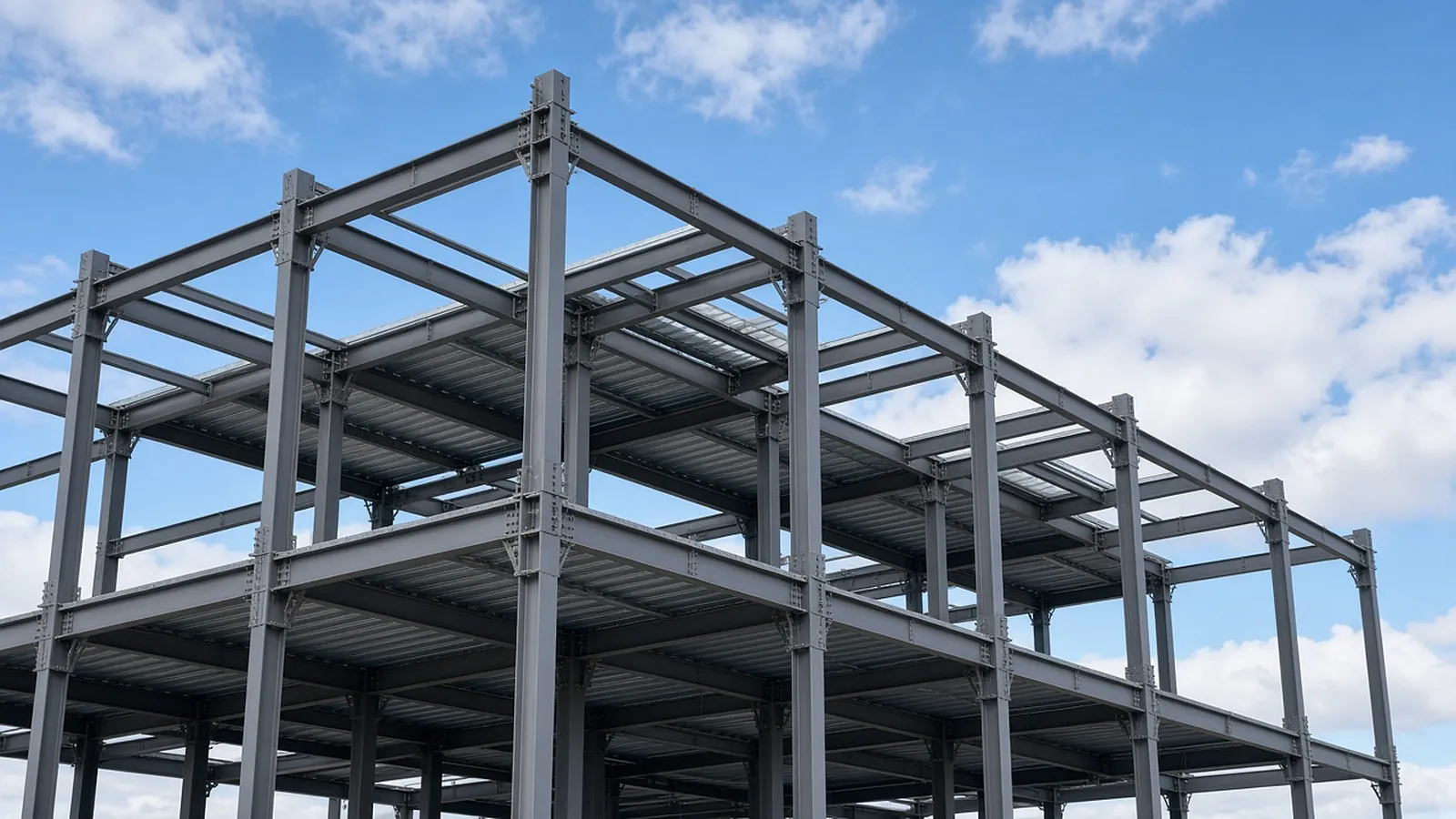
A structural steel estimator at a fabricator turns contract drawings into a bid for furnishing, and often erecting, structural and miscellaneous steel. On a typical bid that means:
- Taking off members by shape, length and count, then converting to weight with the AISC shape tables.
- Classifying connections (shear tabs, clip angles, moment connections, braces, base plates) because they drive shop hours more than tonnage does.
- Pricing material from mill and service-center quotes, plus detailing, galvanizing or paint, freight and erection (self-performed or subcontracted).
- Writing a scope letter with inclusions, exclusions and clarifications, which is where the money is protected.
- Re-pricing addenda and managing bid-day numbers.
The skill that separates a good steel estimator from a fast one is reading risk: connection design delegated to the fabricator, general notes that conflict with details, "AESS" called out on one elevation, or an addendum that quietly changes member sizes.
Training that actually exists
Steel estimating has less formal training than electrical or mechanical estimating. Here's what you can verify today:
| Option | What it is | Best for |
|---|---|---|
| IMPACT Ironworker Contractor University | Five-day "Fundamentals of Cost Estimating and Bidding for Beginners – Structural Steel Installation"; three-day rebar installation version | Erectors and ironworkers moving into estimating |
| AISC Learning catalog | Recorded NASCC sessions, including "Successful Estimating Procedures for the Fabricator" (2011) and "Steel Estimating 101 for Engineers and Architects" (2025) | Context on how fabricators build a price |
| AISC/NISD Detailer Training Series | Free online course, about 120 hours, 10 modules; AISC notes it hasn't been updated recently | Learning to read and think like a detailer |
| Community college estimating and blueprint courses | General construction estimating, plan reading, Excel | The foundation, if you're new to construction |
| Software vendor training | Training for whichever takeoff and estimating tools your shop runs | Speed once you know the method |
| ASPE chapters | Monthly technical meetings and the CPE path | Networking and, later, certification |
Be honest about the gaps. There isn't a widely recognized "steel estimating certificate." Hiring managers at fabricators mostly look for evidence that you can read drawings, know shapes and connections, and have done real bids.
References to own (and how estimators use them)
- AISC Steel Construction Manual, 16th edition (2023). Part 1 has the dimensions and properties for W, HSS, angles, channels and plates you'll use for weights. The manual also includes the AISC 360-22 Specification and the AISC 303-22 Code of Standard Practice.
- AISC 303-22, Code of Standard Practice. It's free to download from AISC. Read the section that classifies structural steel versus other items, and the sections on revisions, allowances and delegated connection design. Many scope fights trace back to the Code, and estimators who know it write better exclusions.
- Your shop's historical data. Hours per piece by connection type, hours per ton by member category, and actual-versus-estimate reports. No book replaces this.
Be careful with free "steel estimating PDF" downloads. Out-of-date shape tables (old W-shape designations, outdated HSS wall thickness assumptions) put errors directly into your weights.
A 90-day practice plan
This plan assumes you have access to a senior estimator and a few completed jobs.
Days 1 to 30: read and weigh. 1. Take a small completed job (under about 50 tons) with the bid drawings, your company's estimate and the approved shop drawings. 2. Do a full member takeoff yourself: shape, length, count, weight. 3. Compare your weight to the estimate and to the shop drawing bill of materials. Write down every difference and its cause.
Days 31 to 60: connections and hours. 1. On the same job, classify every connection by type. 2. Apply your shop's labor units, and compare to the actual hours from job cost reports if they exist. 3. Sit in on a bid-day review and write down every question the senior estimator asks.
Days 61 to 90: a live bid, shadowed. 1. Estimate a live bid in parallel with a senior estimator. 2. Draft the scope letter and an RFI list. 3. When the addendum comes, re-price only the changes and explain the delta.
Track your hours and your misses. Speed comes later; documented accuracy is what earns you your own bids.
Worked example: what a practice comparison looks like
Here's an illustrative comparison from a practice takeoff of a one-story, 40-ton steel building:
| Item | Your takeoff | Company estimate | Cause |
|---|---|---|---|
| Columns | 6.2 tons | 6.2 tons | — |
| Beams and girders | 18.9 tons | 19.6 tons | Missed W12 roof beams at the high roof |
| Joists and deck | By others | By others | Joist supplier quotes directly |
| Connection material | Not carried | ~5% of member weight | Didn't know shop rule for plates and angles |
| Misc. metals | 2.1 tons | 3.4 tons | Missed lintels on architectural elevations |
Every row teaches something: look at all roof levels, carry connection material, and read the architectural sheets for misc. metals. That's the kind of lesson a course can't give you. The 5% connection-material figure here is an example of a shop's own rule; yours may be different.
Pay and career path
The Bureau of Labor Statistics doesn't report steel estimators separately. For all cost estimators, the May 2025 median was $78,740. It was $80,330 at specialty trade contractors and $84,610 in building construction, with the bottom 10% under $48,530 and the top 10% above $130,820. BLS projects a 3% decline in estimator jobs from 2025 to 2035 and cites estimating software as one reason, but still expects about 17,600 openings a year from retirements and turnover.
Typical paths go from detailer, project coordinator, shop lead or ironworker to junior estimator, then senior or chief estimator, or across into project management. ASPE's CPE credential requires five years of estimating experience, so it's a mid-career step, not an entry ticket.
How software and AI change what you should learn
Counting members and measuring lengths is the most automatable part of the job, and AI takeoff tools are getting better at it. That raises the value of the skills that aren't easy to automate: knowing when connection design is delegated, spotting AESS and galvanizing requirements, judging erection sequence and crane access, and writing a tight scope letter. If you're building a training plan, spend your time there.
Where RenderDraw fits
RenderDraw's AI takeoff proposes member counts, lengths and schedule data from structural drawings, with the source sheet on every row and uncertain items in a review queue. For a new estimator, that's also a useful check: compare your own takeoff against the proposed rows and investigate every difference. A senior estimator still approves what gets priced.
Where RenderDraw fits: the counting, with your review.
Speed is easy to promise. Defensible numbers are the job, so RenderDraw keeps the estimator in control of every quantity that gets priced.
- Source on every row. Each quantity keeps its source sheet, location and reviewer decision.
- Lowest confidence first. The review queue shows the drawing tile with the detection highlighted and the extracted value.
- Uncertain items flagged, not hidden. Anything the AI can't confirm goes to the estimator rather than being guessed.
- Nothing priced before approval. Rows move on to pricing only after they are accepted.
Questions estimators ask
How do I become a structural steel estimator?
Most come from detailing, project coordination, shop work or ironworking. Learn to read structural drawings and the AISC Manual's shape tables, understand connections and the AISC Code of Standard Practice, then take off real bid sets under a senior estimator and compare your numbers with the bid and the shop drawings.
Are there courses specifically for steel estimating?
A few. IMPACT's Ironworker Contractor University runs a five-day Fundamentals of Cost Estimating and Bidding course for structural steel installation and a three-day rebar version. AISC's learning catalog has recorded sessions such as Successful Estimating Procedures for the Fabricator (NASCC 2011) and Steel Estimating 101 for Engineers and Architects (2025). Most fabricator estimators still learn primarily on the job.
Are there certifications for estimators?
ASPE's Certified Professional Estimator (CPE) requires five years of estimating experience, a 2,500+ word technical paper and three four-hour exams with a 70% passing score. AACE International offers cost-engineering certifications. Neither is required to work as a steel estimator.
What book should a steel estimator own?
The AISC Steel Construction Manual (16th edition, 2023), which includes the AISC 360-22 Specification and the AISC 303-22 Code of Standard Practice. The Code defines what is and isn't structural steel and how allowances and revisions work, which matters as much as the shape tables.
What does a steel estimator earn?
BLS doesn't break out steel estimators. For all cost estimators the May 2025 median was $78,740, and $80,330 at specialty trade contractors, with the top 10% above $130,820. Check local postings for steel-specific roles.
Is AI going to replace steel estimators?
Counting and measuring are the most automatable part. Scope judgment, connection and erection risk, and pricing strategy are not. Tools like RenderDraw propose quantities with source links for an estimator to review.
See what the AI reads on your own drawings.
Send one representative steel plan set. RenderDraw reviews it and follows up with what the AI extracted and what it flagged for review. Your files remain private while the request is assessed, and there is no obligation.
- Upload framing plans, column and beam schedules, typical connection details, the structural general notes and the spec sections for structural steel and misc. metals.
- RenderDraw reviews the set and the scope you want tested.
- We follow up with extracted quantities, flagged items and next steps.
Related tools and guides
Keep reading on renderdraw.com
Sources and further reading
- AISC: Steel Construction Manual, 16th Edition
- AISC 303: Code of Standard Practice for Steel Buildings and Bridges
- AISC Learning: Successful Estimating Procedures for the Fabricator [N61]
- AISC Learning: Steel Estimating 101 for Engineers and Architects [Z7] 2025
- AISC/NISD Detailer Training Series (free online course)
- IMPACT Ironworker Contractor University course catalog (PDF)
- ASPE: Certified Professional Estimator FAQ
- U.S. Bureau of Labor Statistics: Cost Estimators, Occupational Outlook Handbook
Figures marked as rules of thumb are starting points, not standards. Check the current edition of any code or standard your project specifies, and use your own historical production rates where you have them. Sources checked 2026-11-01.